If you haven’t yet, you should see part one of this in-depth investigative report.
But enough chit chat, it’s lunch time!
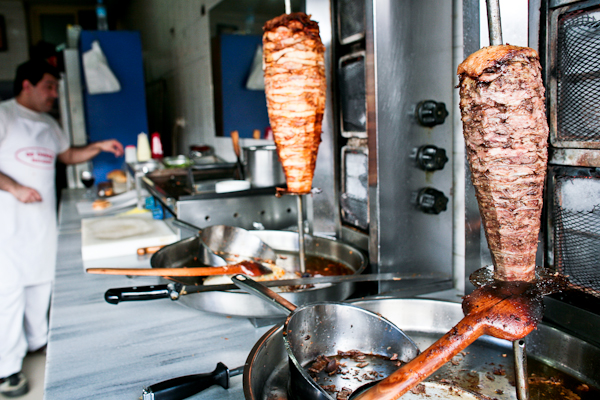
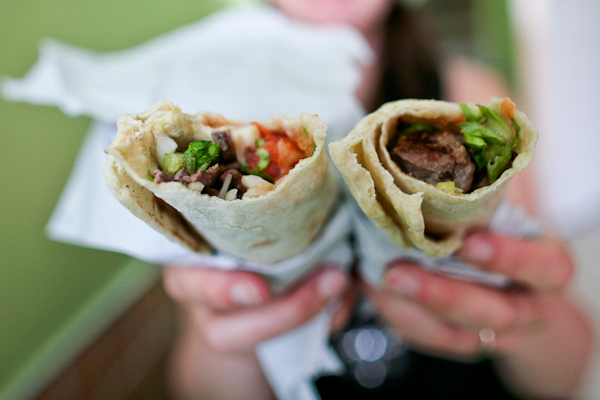
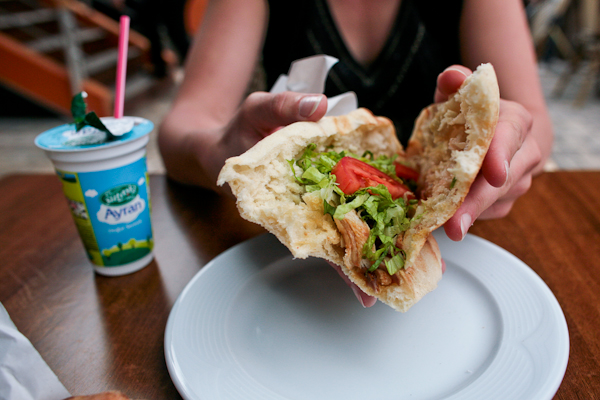
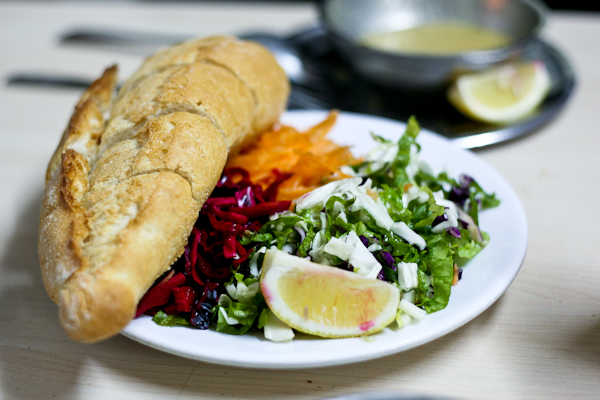
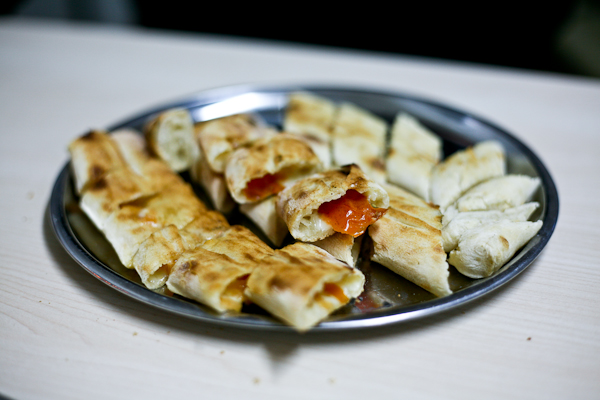
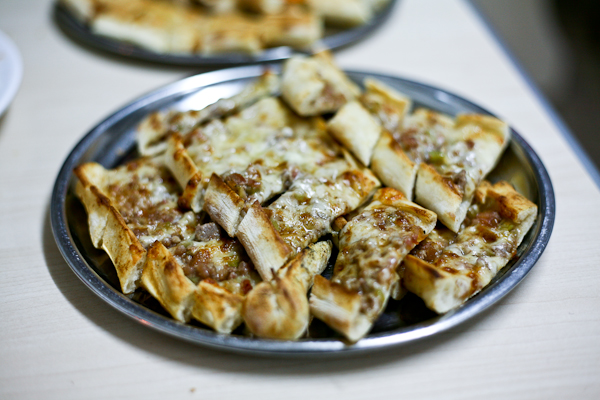
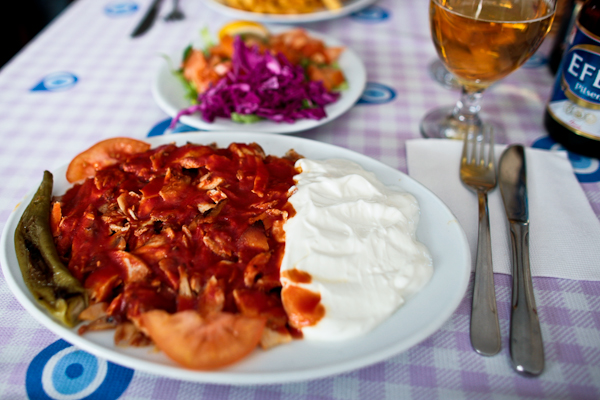
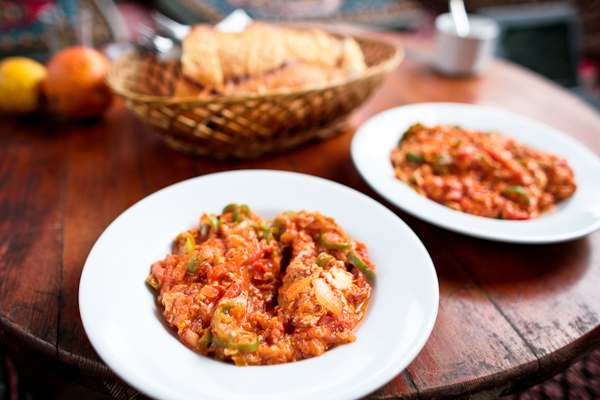
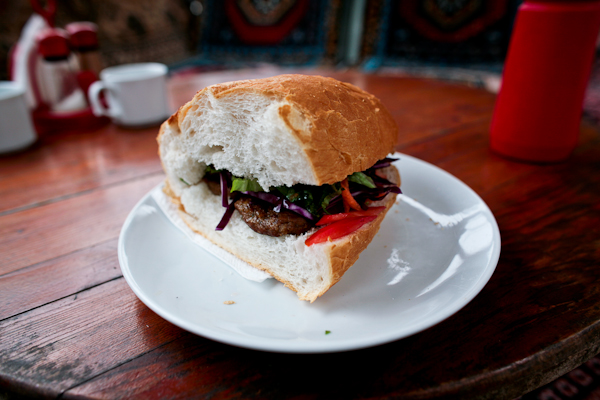
Doner. Lamb and chicken are available on these vertical spits on what feels like every street corner in Turkey. I have already pledged to Laura that one day our BBQ will include one of these. It will be mine, oh yes, it will be mine.This is the bread and butter of Turkish lunch. Okay, maybe a cliched food metaphor is not the best way to describe a totally different type of food, that contains neither bread nor butter, but hey… Anyway, these Tavuc Durum (chicken doners) can be had for about 2-3 TL (about $1.50-2.25 CDN) all over Turkey. Sliced fresh off a BBQ spit, the meat is usually delicious, and is simply presented with tomato and lettuce, mayonnaise, and ketchup ("Hold the ketchup."). Likewise, you can usually get a Tavuc or Et (literally "meat") doner in a half loaf of bread. Meat, of course, means lamb in Turkey, which is ubiquitous. Usually the half-loaf sandwiches are even less expensive than the durum variety. In the background you can see an Ayran – a yoghurt/water drink that is very popular here. It is kind of salty, but becomes a rapidly acquired taste and is very delicious by your second or third one.Typical Turkish salad. Decent restaurants provide salad like this free with your meal. As well, bread is provided with virtually every dish ordered. The salad is a refreshing mix of semi-sweet pickled carrots and cabbage, and a mixed greens variety that often tastes of pungent, palette-cleaning cilantro or parsely.Behold the mighty Pide! Turkish pizza (pide) comes in all sorts of varieties, but is generally a simpler concoction than North American pizza. The dough is semi-crispy with just the right amount of chewy. It is shaped like an elongated football and folded over at the edges. Most decent pide restaurants cook their pides in wood-fired brick ovens. Don't miss out on pide if you make it to Turkey.The mixed meat and cheese pide. Toppings tend to include white cheese or goat cheese, ground lamb, sausage, and occasionally vegetables or mushrooms.The Iskender kebap. This is a specialty of the town of Bursa, but is available all over Turkey. Named for it's original creator (who is himself named after Alexander the Great – "Iskender"), the Iskender Kebap is heart attack on a plate. This rich dish was a once-is-enough experience for Laura and I, although Turks seem to love it. On the bottom is a piece of soggy bread, with strips of Et (lamb meat) layered on top (this one is actually chicken – I was suffering lamb overdose at this point in the trip). The whole thing is drenched in tomato sauce, butter and yoghurt. Garnish with hot peppers to taste.Turkish Menemen (sometimes called Melemen). This "Turkish Omelette" is more like runny scrambled eggs mixed with tomatoes and peppers. Although often a breakfast dish, it is also available for lunch and dinner. As you might suspect, it sort of tastes like a semi-spicy tomato sauce mixed with eggs. Wait a sec, you say. That's just a hamburger! Well, not quite. In Turkey, kofte (lamb meatballs) are second only to kebap as the national meat dish. These things are generally mixed with peppers or other spices and are far more delicious than the average beef meatball. They are served alone, as part of full meals, or in sandwiches like this one.
Anyway, it actually is lunch time, and as we are back in Istanbul for about 24 hours before heading off to Rome, we’d better take advantage of the food while we can…
[…] like food, you might want to checkÂout some of our posts about food in Morocco, Iran, Cambodia, Turkey,  Turkish breakÂfasts, Turkish food at Dilek National Park,  Thailand cuisine and […]
I’m going to get our chauffeur to take a lap through the slums in Mumbai so I can get a real feel for how the locals live. Good thing we’ll have AC so I won’t have to worry about rolling down the windows.
Hey, don’t knock the Homer, I actually really enjoyed it. Surprising depth to the characters and some sections were actually pretty gripping.
The best parts, however, were when the ancient Achaean’s slipped into British colloquialisms inserted by the translator. nice work, old stuffy british dude.
Hell ya, I’ll do a India guestblog for your site. Should have good internet access at all the 5 star hotels I’ll be staying at. har har.
@Dale: Yeah, maybe you could do an investigative piece on the enormous wealth inequality in India. You wouldn’t even need to leave the poolside, just ask the pool boy how much money he’s making and compare it with what you’re spending at the bar.
Best. Post. Ever. Seriously, I read this while eating a banana for breakfast and my soul hurt.
Hey, I finished the Iliad last night and remembered that crack you made about me not actually reading it and just watching Troy.
Anyways, I was pretty surprised to find out that the story ends with Hector’s Funeral, and Achillies doesn’t die, there’s no Achilles heel, no Trojan Horse and no sacking of Troy. Pop culture failed me entirely.
@Dale: Yeah, I also recently learned that all of that stuff is only mentioned in the Odyssey. Of course, I didn’t slog through a thousand pages of ancient greek oral poetry to find out, so that was nice.
And if you think lunch looks good, just wait for dinner. Hey! I also wanted to ask you if you want to guest blog your India trip around these parts when you go in April. I think people would dig it, and I know we would. Email me.



Leave a Reply